Craft · January 2026 · 6 min read
What the carpets in Tazenakht are actually saying
Every motif has a name. We sat with three weavers who decoded a rug stitch by stitch.
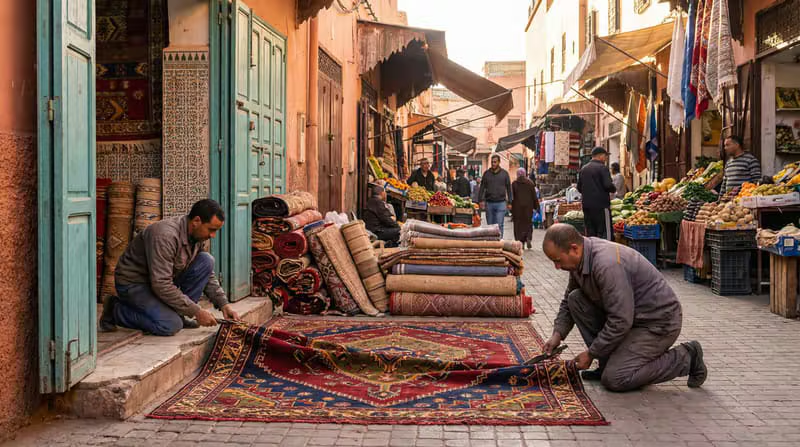
In the cooperative at Tazenakht, the looms face the window for the light and the women sit with their backs to the door. Hadda, who has been weaving since she was nine, put a finished rug on the floor and asked me what I saw.
A border, some diamonds, a field of small crosses. What she saw was a family record.
The border is a calendar
The repeating pattern along the edge marks seasons of a marriage, counted in motifs rather than years. The central diamond is protection against the evil eye — tighanim, she called it. The small crosses are stars, and their number can name a child.
“A rug is a letter. Some of them take a year to write.”
Why the colours changed
Before synthetic dyes, the palette came from what the valley provided: madder root for red, indigo for blue, pomegranate peel for ochre. Now the wool often arrives already dyed, and the older weavers say the colours are louder and the stories shorter.
The cooperative is trying to reverse that — a small dye garden behind the workshop, and a price that pays for the extra weeks a natural-dye rug takes.
If you visit, buy something small and ask about it. The explanation is usually better than the rug.