Village life · March 2026 · 7 min read
The night the village taught me to bake bread
In Aït Bouguemez the tannour is lit at four in the morning. I was handed a dough ball and a lesson in patience.
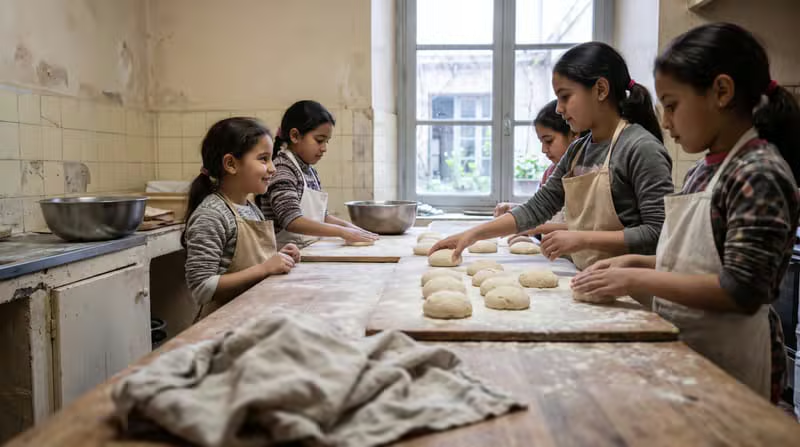
Fadma knocked on the door at ten past four. Not loudly — the way someone knocks when they know you are already awake and pretending not to be. I had arrived the evening before, and the whole village seemed to have agreed that I would be baking in the morning.
Downstairs, the courtyard was still dark. A fire was being coaxed under the tannour, a clay oven built into the wall of the house. Fadma's daughter-in-law, Khadija, was already kneading on a low wooden board. Nobody explained anything. A ball of dough was simply pressed into my hands.
The dough has a schedule
Sourdough here is not a hobby. It is the first task of the day, and the timing is fixed by the fire, not by a clock. Khadija showed me the fold — four turns, palm heel, thumb tucking the seam — and then stopped showing me, which is how I learned to do it.
“You cannot hurry bread. You can only stand next to it and wait correctly.”
By five the fire had burned down to embers and the oven was hot enough to make the air above it shimmer. Fadma tested it with a handful of flour thrown against the inside wall. It browned in a breath. She nodded once, and the bread went in.
What the morning is actually about
Ten loaves, stacked in a cloth in the corner of the courtyard, before the sun cleared the ridge. Neighbours arrived with their own dough and left with someone else's bread — a rotation that has probably been going for centuries.
I had expected a cooking lesson. What I got was a schedule, a piece of village infrastructure, and a reminder that in this valley hospitality is not an occasional gesture. It is a system, and the bread is part of it.
If you walk this route, the guesthouses in Tabant will happily wake you for the tannour — but ask first, and bring your own flour from the market in Azilal.